
- 简体中文
- English
Concrete jungle: How do we practice urban greening in a big city
There is no one-size-fits-all answer to this question. The challenges and opportunities faced by different regions vary. However, despite their different paths, they all lead to the same destination, which is closely related to rewilding. Jonathan Pile, director of O 'Warr's London office, is well aware of the differences. In my understanding, rewilding, to some extent, refers to restoring natural processes and reshaping natural networks. One part of it refers to the underground soil ecosystem. If only some trees, native plants or shrubs are planted in artificial cement flowerpots, it is not considered rewilding, because no natural formation process has occurred in the soil beneath.
In high-density cities, almost every inch of land is covered with cement, forming a barrier that hinders the plants and organisms in nature from carrying out their work, such as replenishing soil, nurturing animals and plants, nourishing trees, etc., allowing them to absorb carbon dioxide and delay climate change. In other words, our natural ecosystem is precisely lacking a very important link among them.
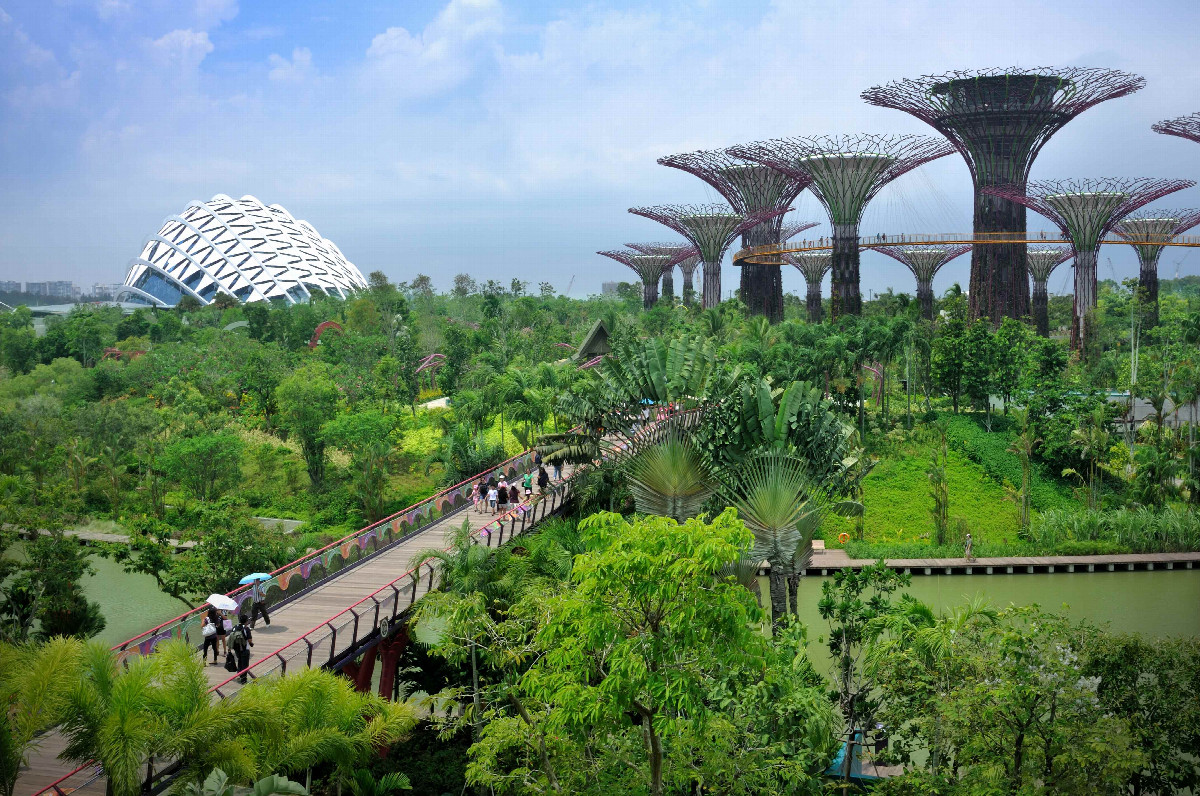
Garden City Singapore
 The Singaporean government formulated a comprehensive strategy and action
plan for biodiversity as early as 2009 (updated in 2019). Starting from
large-scale tree-planting campaigns in the 1960s, the comprehensive strategy
that has developed to the present not only covers green Spaces in the city but
also "further integrates natural ecosystems into parks, connecting parks,
ecosystems and related activities Build a green corridor network covering the
entire island." Singapore takes pride in its biophilic urban environment - due
to the shortage of local land, it is particularly adept at extending green
landscapes upwards, with numerous examples. The residential project Eden,
recently completed by Swire Properties and its close collaborator, the ingenious
architect Thomas Heatherwick, offers a total of 20 luxury residential units. The
building is filled with various tropical plants and has successfully been
certified by the Environmental Building Rating Agency. Since 1994, Singaporean
architectural design firm WOHA has been dedicated to developing biophilic
design. Looking at their works - including mixed-use, residential or master
plans, etc. - is like taking a lesson in naturalistic architecture. The
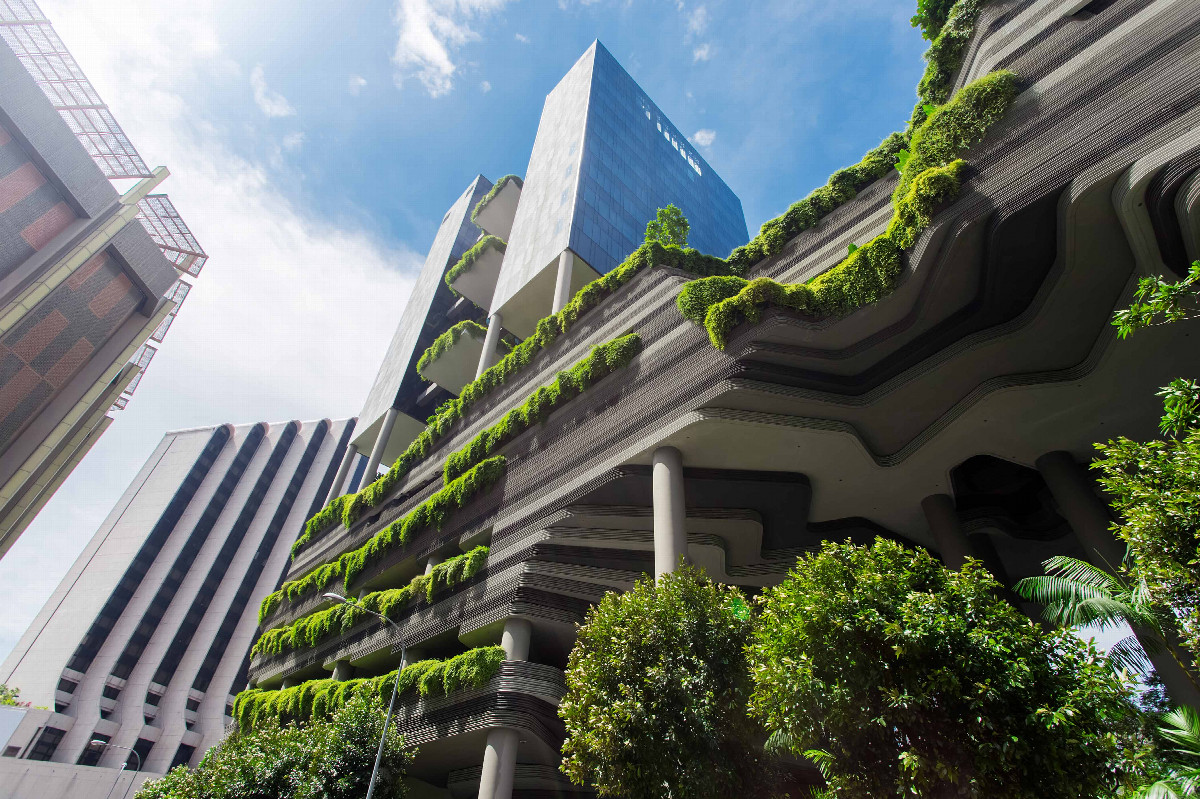
three-dimensional greening design of the Royal Park Hotel and office complex
they designed echoes the adjacent Fanglin Park. Another project, Kampung
Admiralty, is an integrated building that combines elderly housing and public
facilities. It also features dense green Spaces running through various
functional areas.
The Singaporean government formulated a comprehensive strategy and action
plan for biodiversity as early as 2009 (updated in 2019). Starting from
large-scale tree-planting campaigns in the 1960s, the comprehensive strategy
that has developed to the present not only covers green Spaces in the city but
also "further integrates natural ecosystems into parks, connecting parks,
ecosystems and related activities Build a green corridor network covering the
entire island." Singapore takes pride in its biophilic urban environment - due
to the shortage of local land, it is particularly adept at extending green
landscapes upwards, with numerous examples. The residential project Eden,
recently completed by Swire Properties and its close collaborator, the ingenious
architect Thomas Heatherwick, offers a total of 20 luxury residential units. The
building is filled with various tropical plants and has successfully been
certified by the Environmental Building Rating Agency. Since 1994, Singaporean
architectural design firm WOHA has been dedicated to developing biophilic
design. Looking at their works - including mixed-use, residential or master
plans, etc. - is like taking a lesson in naturalistic architecture. The
three-dimensional greening design of the Royal Park Hotel and office complex
they designed echoes the adjacent Fanglin Park. Another project, Kampung
Admiralty, is an integrated building that combines elderly housing and public
facilities. It also features dense green Spaces running through various
functional areas.
Parklin Hotel Singapore
Singapore has set clear national goals for biodiversity conservation - rather than just a wish list - and has committed to continuously monitoring the implementation. One of the key indicators of rewilding is to independently verify the plan to assess its effectiveness in conserving and improving habitats. Therefore, it is necessary to carry out monitoring work such as mapping, surveying, evaluation, and effectiveness assessment.
It's really hard for Asian countries to imagine that many shopping districts in the city centre of the UK are shrinking. Take the British city of Nottingham as an example. They are promoting a highly forward-looking urban renewal proposal - to rewild the Broadmarsh shopping center, which was built in the 1970s and has been in disrepair. This conservation project initiated by the Nottinghamshire Wildlife Foundation proposes to reintroduce nature into the city by creating natural ecological environments such as ponds, wetlands, orchards and grasslands, rather than traditional urban parks or recreational Spaces, and extend and connect to the famous Sherwood Royal Forest to the north.
Soil is formed by the decomposition of plant residues by microorganisms. Scientists have always had different opinions on the time it takes for one inch of soil to form, ranging from 100 years, 500 to 1,000 years. The world is confronted with the large-scale felling of trees due to intensive agricultural cultivation. China is also facing various environmental costs brought about by urban construction, such as soil erosion and loss, the destruction of natural ecological processes, and the blockage of river networks and river basins. When building new settlements, you need to consider the impact on the natural landscape, as well as the natural networks such as soil and rivers. Jonathan explained that when making a master plan for a new district, it is necessary to incorporate parks and ponds, not purely for greening purposes, but to collect rainwater that buildings and cement floors cannot absorb.
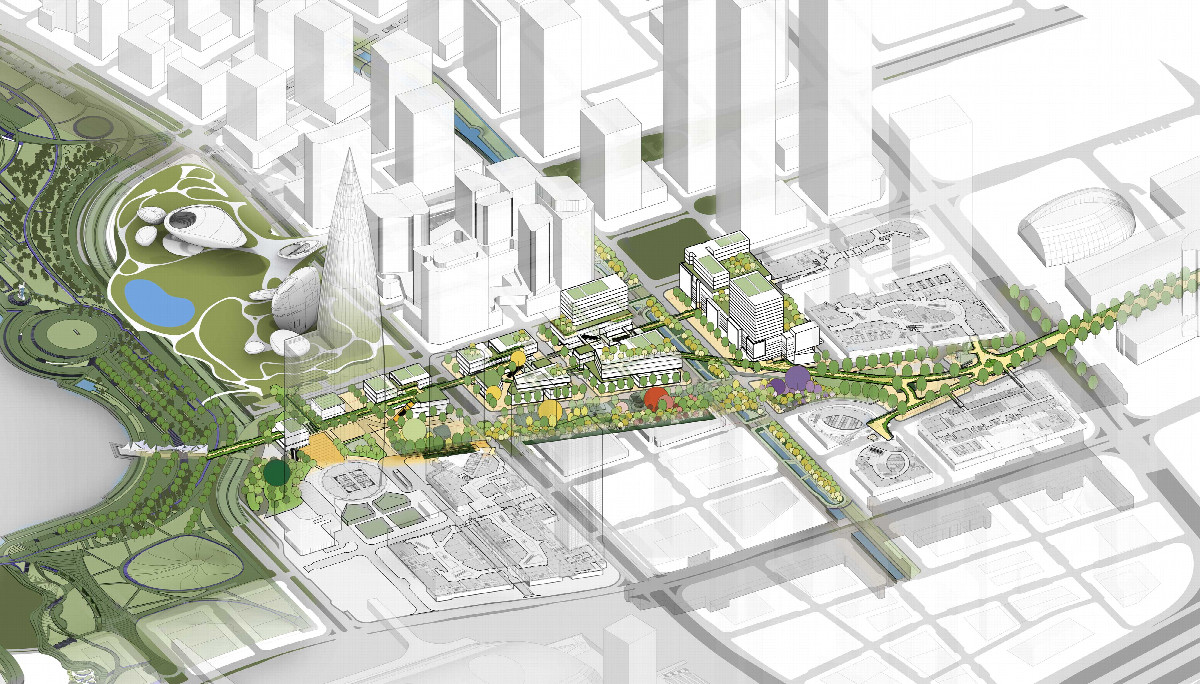
Green Valley Design of Shenzhen Bay Cultural Square
Shenzhen Bay Cultural Square, often referred to as the "Green Valley", is a low-density comprehensive development project that stands in sharp contrast to the surrounding high-rise buildings. Jonathan described them as a network of pedestrian walkways, interspersed among large and small cultural, retail and dining venues. It is a dense, multi-layered and vibrant public space, not a traditional park, but a series of diverse public Spaces connected by green belts and cultural belts. The walkway system that runs through the buildings is more ingeniously integrated into the subway station and ground road network, spanning both within and outside the area.
The project design emphasizes a people-oriented approach while also taking the green principle as its starting point. Urban greening has many benefits for the environment, such as lowering the ambient temperature, reducing the load on the rainwater drainage system, and effectively soundproofing. Jonathan pointed out that the project design does not expect to alleviate the loss of biodiversity; instead, the focus is on bringing urban life closer to nature. Urban greening is also of great benefit to human health and well-being, especially from a psychological perspective. It constantly reminds us of the origin of humanity, that we all come from nature, as well as the changing of seasons, birds and butterflies, etc. In the project, all kinds of beauty of nature are recreated. It is no easy task to achieve true rewilding. However, by rebuilding the close relationship between humans and nature, it is hoped that everyone's awareness of natural ecology can be awakened.
Concrete jungle: How do we practice urban greening in a big city
There is no one-size-fits-all answer to this question. The challenges and opportunities faced by different regions vary. However, despite their different paths, they all lead to the same destination, which is closely related to rewilding. Jonathan Pile, director of O 'Warr's London office, is well aware of the differences. In my understanding, rewilding, to some extent, refers to restoring natural processes and reshaping natural networks. One part of it refers to the underground soil ecosystem. If only some trees, native plants or shrubs are planted in artificial cement flowerpots, it is not considered rewilding, because no natural formation process has occurred in the soil beneath.
In high-density cities, almost every inch of land is covered with cement, forming a barrier that hinders the plants and organisms in nature from carrying out their work, such as replenishing soil, nurturing animals and plants, nourishing trees, etc., allowing them to absorb carbon dioxide and delay climate change. In other words, our natural ecosystem is precisely lacking a very important link among them.
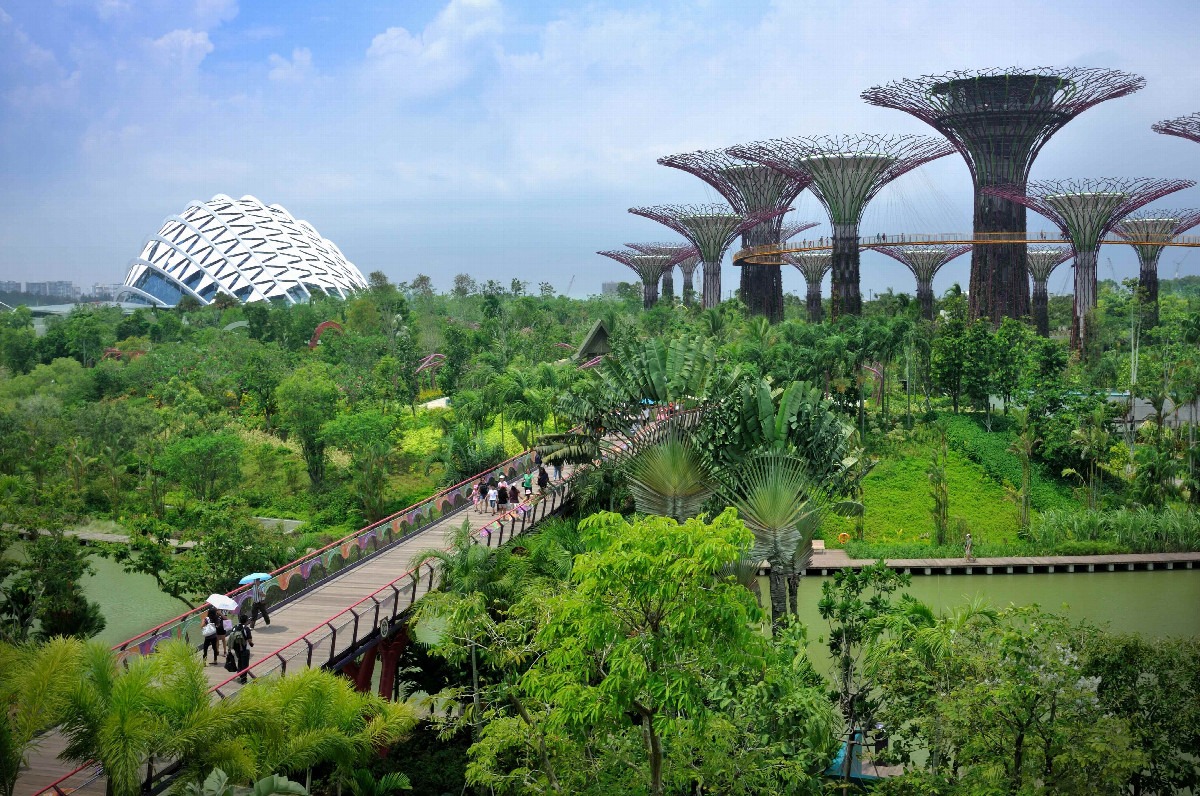
Garden City Singapore
The Singaporean government formulated a comprehensive strategy and action
plan for biodiversity as early as 2009 (updated in 2019). Starting from
large-scale tree-planting campaigns in the 1960s, the comprehensive strategy
that has developed to the present not only covers green Spaces in the city but
also "further integrates natural ecosystems into parks, connecting parks,
ecosystems and related activities Build a green corridor network covering the
entire island." Singapore takes pride in its biophilic urban environment - due
to the shortage of local land, it is particularly adept at extending green
landscapes upwards, with numerous examples. The residential project Eden,
recently completed by Swire Properties and its close collaborator, the ingenious
architect Thomas Heatherwick, offers a total of 20 luxury residential units. The
building is filled with various tropical plants and has successfully been
certified by the Environmental Building Rating Agency. Since 1994, Singaporean
architectural design firm WOHA has been dedicated to developing biophilic
design. Looking at their works - including mixed-use, residential or master
plans, etc. - is like taking a lesson in naturalistic architecture. The
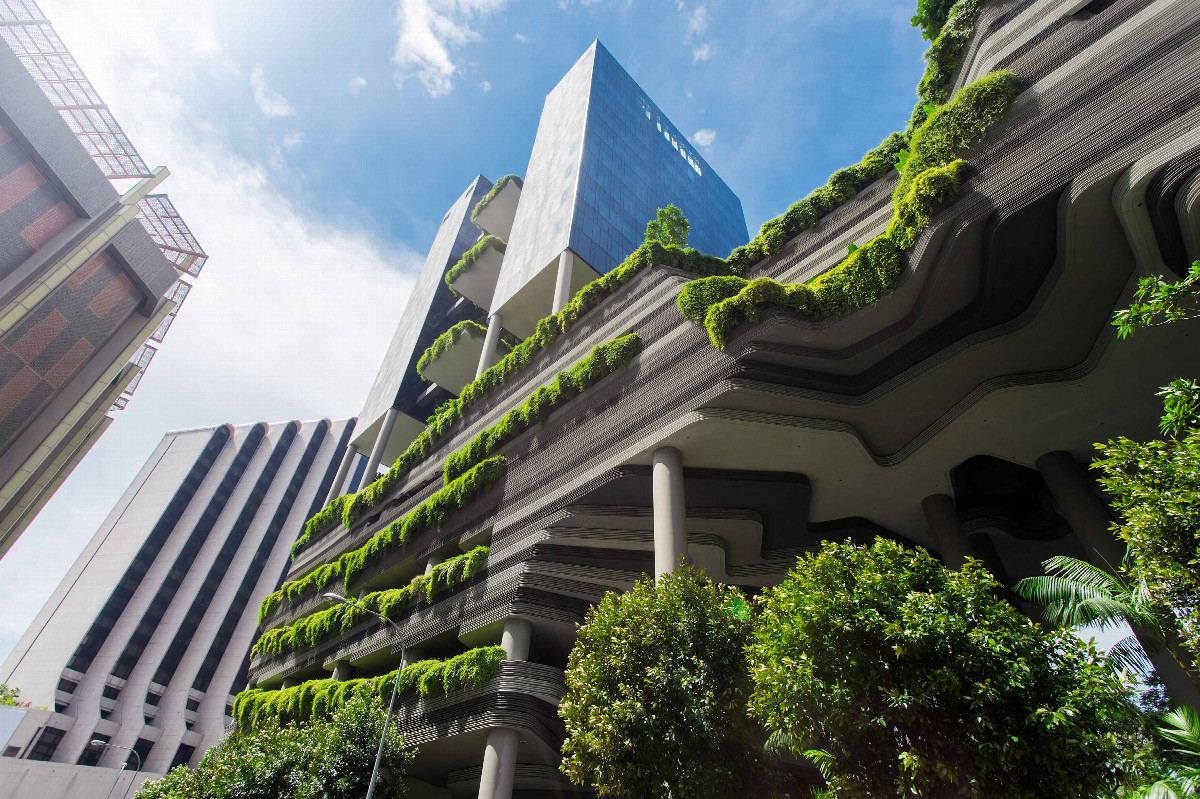
three-dimensional greening design of the Royal Park Hotel and office complex
they designed echoes the adjacent Fanglin Park. Another project, Kampung
Admiralty, is an integrated building that combines elderly housing and public
facilities. It also features dense green Spaces running through various
functional areas.
Parklin Hotel Singapore
Singapore has set clear national goals for biodiversity conservation - rather than just a wish list - and has committed to continuously monitoring the implementation. One of the key indicators of rewilding is to independently verify the plan to assess its effectiveness in conserving and improving habitats. Therefore, it is necessary to carry out monitoring work such as mapping, surveying, evaluation, and effectiveness assessment.
It's really hard for Asian countries to imagine that many shopping districts in the city centre of the UK are shrinking. Take the British city of Nottingham as an example. They are promoting a highly forward-looking urban renewal proposal - to rewild the Broadmarsh shopping center, which was built in the 1970s and has been in disrepair. This conservation project initiated by the Nottinghamshire Wildlife Foundation proposes to reintroduce nature into the city by creating natural ecological environments such as ponds, wetlands, orchards and grasslands, rather than traditional urban parks or recreational Spaces, and extend and connect to the famous Sherwood Royal Forest to the north.
Soil is formed by the decomposition of plant residues by microorganisms. Scientists have always had different opinions on the time it takes for one inch of soil to form, ranging from 100 years, 500 to 1,000 years. The world is confronted with the large-scale felling of trees due to intensive agricultural cultivation. China is also facing various environmental costs brought about by urban construction, such as soil erosion and loss, the destruction of natural ecological processes, and the blockage of river networks and river basins. When building new settlements, you need to consider the impact on the natural landscape, as well as the natural networks such as soil and rivers. Jonathan explained that when making a master plan for a new district, it is necessary to incorporate parks and ponds, not purely for greening purposes, but to collect rainwater that buildings and cement floors cannot absorb.
Green Valley Design of Shenzhen Bay Cultural Square
Shenzhen Bay Cultural Square, often referred to as the "Green Valley", is a low-density comprehensive development project that stands in sharp contrast to the surrounding high-rise buildings. Jonathan described them as a network of pedestrian walkways, interspersed among large and small cultural, retail and dining venues. It is a dense, multi-layered and vibrant public space, not a traditional park, but a series of diverse public Spaces connected by green belts and cultural belts. The walkway system that runs through the buildings is more ingeniously integrated into the subway station and ground road network, spanning both within and outside the area.
The project design emphasizes a people-oriented approach while also taking the green principle as its starting point. Urban greening has many benefits for the environment, such as lowering the ambient temperature, reducing the load on the rainwater drainage system, and effectively soundproofing. Jonathan pointed out that the project design does not expect to alleviate the loss of biodiversity; instead, the focus is on bringing urban life closer to nature. Urban greening is also of great benefit to human health and well-being, especially from a psychological perspective. It constantly reminds us of the origin of humanity, that we all come from nature, as well as the changing of seasons, birds and butterflies, etc. In the project, all kinds of beauty of nature are recreated. It is no easy task to achieve true rewilding. However, by rebuilding the close relationship between humans and nature, it is hoped that everyone's awareness of natural ecology can be awakened.